
Renewed confidence and selective growth
After a period of uncertainty, waiting, and recalibration, 2026 is increasingly shaping up as a positive, yet cautious year for real estate investments and market uptake. The real estate market is demonstrating its adaptation to a new economic equilibrium. There is a growing need for structurally higher interest rates, persistent inflation, and geopolitical tensions. These factors have not disappeared, but are increasingly being factored into prices, return requirements, and investment decisions. Expectations for 2026 are therefore predominantly positive, with a clear emphasis on quality, realism, and feasibility.
While previous years were characterized by price pressure, depreciation, and investor reluctance, the focus is now shifting to sustainable cash flows, stable rental income, and long-term demand. Real estate is once again being approached as a long-term investment rather than an instrument for rapid value growth. This makes the market less spectacular, but more robust and more resilient to economic fluctuations.
Global analysts anticipate an investment volume of more than USD 1 trillion in real estate transactions in 2026, with a clear concentration of growth in Europe, the Middle East, and Africa. A further increase in investment volume is also expected in the Netherlands. Market participants anticipate approximately EUR 13 to 14 billion in commercial real estate transactions annually. These transactions are primarily driven by investors seeking to allocate capital to properties with stable demand, limited volatility, and long-term value.
The acquisition side shows a similar picture. Users are making decisions again, albeit more consciously and selectively than before. In the office market, this translates into a preference for well-located, energy-efficient buildings with flexible use. Logistics real estate continues to benefit from structural trends such as e-commerce and the reorganization of international supply chains, while
residential real estate remains a stable pillar of the market due to ongoing scarcity
For investors, 2026 will primarily be a year of selectivity. Not every property and not every segment will benefit equally from the recovery. The period in which value appreciation was practically a given is behind us. Investment returns must come from rental income and operating cash flows, partly because long-term interest rates remain relatively high and yield compression is limited. Active asset management and a sharp selection of quality assets will therefore be key to outperformance.
Institutional investors are returning to the market, while private investors continue to see opportunities in niche markets. International capital is once again explicitly looking to the Netherlands as a stable and transparent real estate market. Sectors such as residential, student housing, senior living, healthcare real estate, and logistics, in particular, demonstrate that supply and demand are structurally imbalanced in the owner's favor. A cautious price increase of approximately 3 percent is expected in the housing market for 2026, driven by structural scarcity and income growth. This is lower than in previous years, but still clearly positive.
Not all forecasts are entirely optimistic, however. Economic institutions like ING point out that investment conditions will remain relatively limited in 2026 due to political uncertainty and persistently high financing costs. This reinforces the image of a market where quality and discipline, rather than speed, make the difference.
This positive outlook is countered by a practical reality that cannot be ignored. The processing time for real estate transactions is under pressure, not due to a lack of interest, but due to execution capacity. In recent reporting on the NOS news, notaries indicated that in some regions they are only available to execute deeds after five months. This is a worrying development that is not common in every practice – certainly not ours – but it is an important consideration for parties wishing to complete transactions in 2026.
This warning doesn't detract from the positive market expectations, but it does underscore the importance of sound planning and realistic timelines. Anyone closing a deal today should anticipate longer lead times for legal settlements and build flexibility into contractual agreements.
All things considered, 2026 can be read as a year of renewed confidence in real estate. Not driven by euphoria, but by rational choices and solid foundations. The market is moving again, take-up and investment are picking up, and there is room for growth, provided that growth is carefully managed. Real estate thus reaffirms its role as a stable asset in a changing economic environment. For those who take quality, timing, and execution seriously, 2026 offers primarily opportunities.
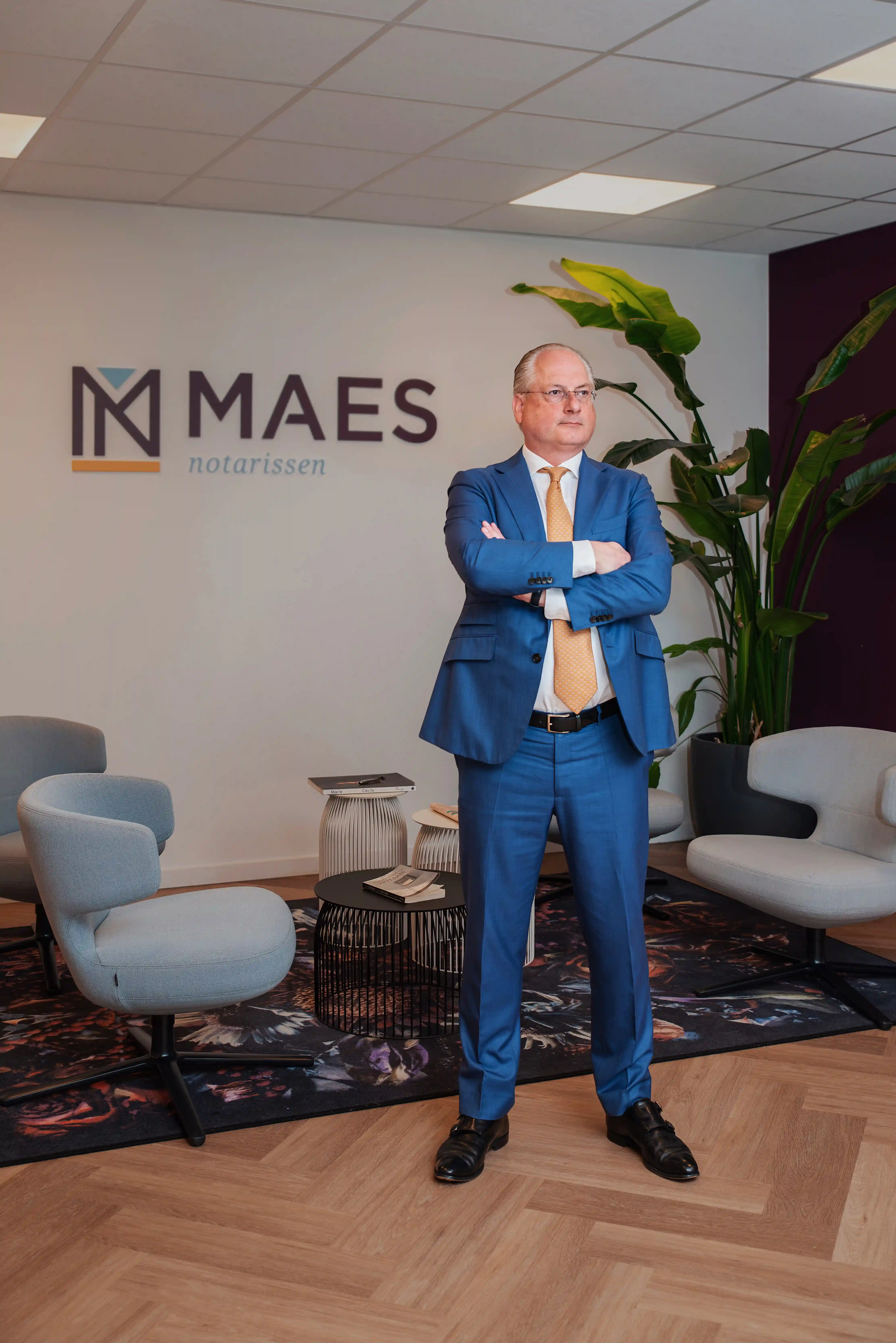
Geert Janssen is a notary at Maes notaries.
This article previously appeared in the Real Estate Journal: https://vastgoedjournaal.nl/news/71709/hernieuwd-vertrouwen-en-
While previous years were characterized by price pressure, depreciation, and investor reluctance, the focus is now shifting to sustainable cash flows, stable rental income, and long-term demand. Real estate is once again being approached as a long-term investment rather than an instrument for rapid value growth. This makes the market less spectacular, but more robust and more resilient to economic fluctuations.
Normalization
In 2026, the real estate market will be firmly in a phase of normalization. Financing conditions have stabilized, and interest rates appear to have peaked. Capital is not cheap, but it has become more predictable. This predictability is essential for investors. This results in a gradual increase in transactions and improved liquidity, both in the Netherlands and the broader European market. At the same time, volumes are still below their pre-2020 peaks, underscoring that the recovery will be controlled and phased.Global analysts anticipate an investment volume of more than USD 1 trillion in real estate transactions in 2026, with a clear concentration of growth in Europe, the Middle East, and Africa. A further increase in investment volume is also expected in the Netherlands. Market participants anticipate approximately EUR 13 to 14 billion in commercial real estate transactions annually. These transactions are primarily driven by investors seeking to allocate capital to properties with stable demand, limited volatility, and long-term value.
The acquisition side shows a similar picture. Users are making decisions again, albeit more consciously and selectively than before. In the office market, this translates into a preference for well-located, energy-efficient buildings with flexible use. Logistics real estate continues to benefit from structural trends such as e-commerce and the reorganization of international supply chains, while
residential real estate remains a stable pillar of the market due to ongoing scarcity
Investing with a focus on quality
For investors, 2026 will primarily be a year of selectivity. Not every property and not every segment will benefit equally from the recovery. The period in which value appreciation was practically a given is behind us. Investment returns must come from rental income and operating cash flows, partly because long-term interest rates remain relatively high and yield compression is limited. Active asset management and a sharp selection of quality assets will therefore be key to outperformance.Institutional investors are returning to the market, while private investors continue to see opportunities in niche markets. International capital is once again explicitly looking to the Netherlands as a stable and transparent real estate market. Sectors such as residential, student housing, senior living, healthcare real estate, and logistics, in particular, demonstrate that supply and demand are structurally imbalanced in the owner's favor. A cautious price increase of approximately 3 percent is expected in the housing market for 2026, driven by structural scarcity and income growth. This is lower than in previous years, but still clearly positive.
Not all forecasts are entirely optimistic, however. Economic institutions like ING point out that investment conditions will remain relatively limited in 2026 due to political uncertainty and persistently high financing costs. This reinforces the image of a market where quality and discipline, rather than speed, make the difference.
Legal blockage
This positive outlook is countered by a practical reality that cannot be ignored. The processing time for real estate transactions is under pressure, not due to a lack of interest, but due to execution capacity. In recent reporting on the NOS news, notaries indicated that in some regions they are only available to execute deeds after five months. This is a worrying development that is not common in every practice – certainly not ours – but it is an important consideration for parties wishing to complete transactions in 2026.This warning doesn't detract from the positive market expectations, but it does underscore the importance of sound planning and realistic timelines. Anyone closing a deal today should anticipate longer lead times for legal settlements and build flexibility into contractual agreements.
All things considered, 2026 can be read as a year of renewed confidence in real estate. Not driven by euphoria, but by rational choices and solid foundations. The market is moving again, take-up and investment are picking up, and there is room for growth, provided that growth is carefully managed. Real estate thus reaffirms its role as a stable asset in a changing economic environment. For those who take quality, timing, and execution seriously, 2026 offers primarily opportunities.
Geert Janssen is a notary at Maes notaries.
This article previously appeared in the Real Estate Journal: https://vastgoedjournaal.nl/news/71709/hernieuwd-vertrouwen-en-
Services
See also

Why MAES notaries
We guide our clients through the moments that truly matter in life. Whether for business or pleasure. We offer peace of mind, reliability, and security. Impeccable, dedicated, and honest.

Corporate Social Responsibility
We recognize the responsibility we bear for our stakeholders: our customers, our employees, suppliers, the government, and the society we are part of. This applies to both our professional and social spheres. Our social responsibility focuses on three themes: governance , a sustainable living environment, and social engagement. We hope to make an impact through these initiatives.