
All in a row
News

MAES Notaries | Newsletter | Q3 2026

Budget Day 2026: is your own budget in order?
What follows is a day full of figures, plans, and policy intentions. Important for the Netherlands. But at least as important: what do all those plans mean for you? For your wallet, your business, your family?
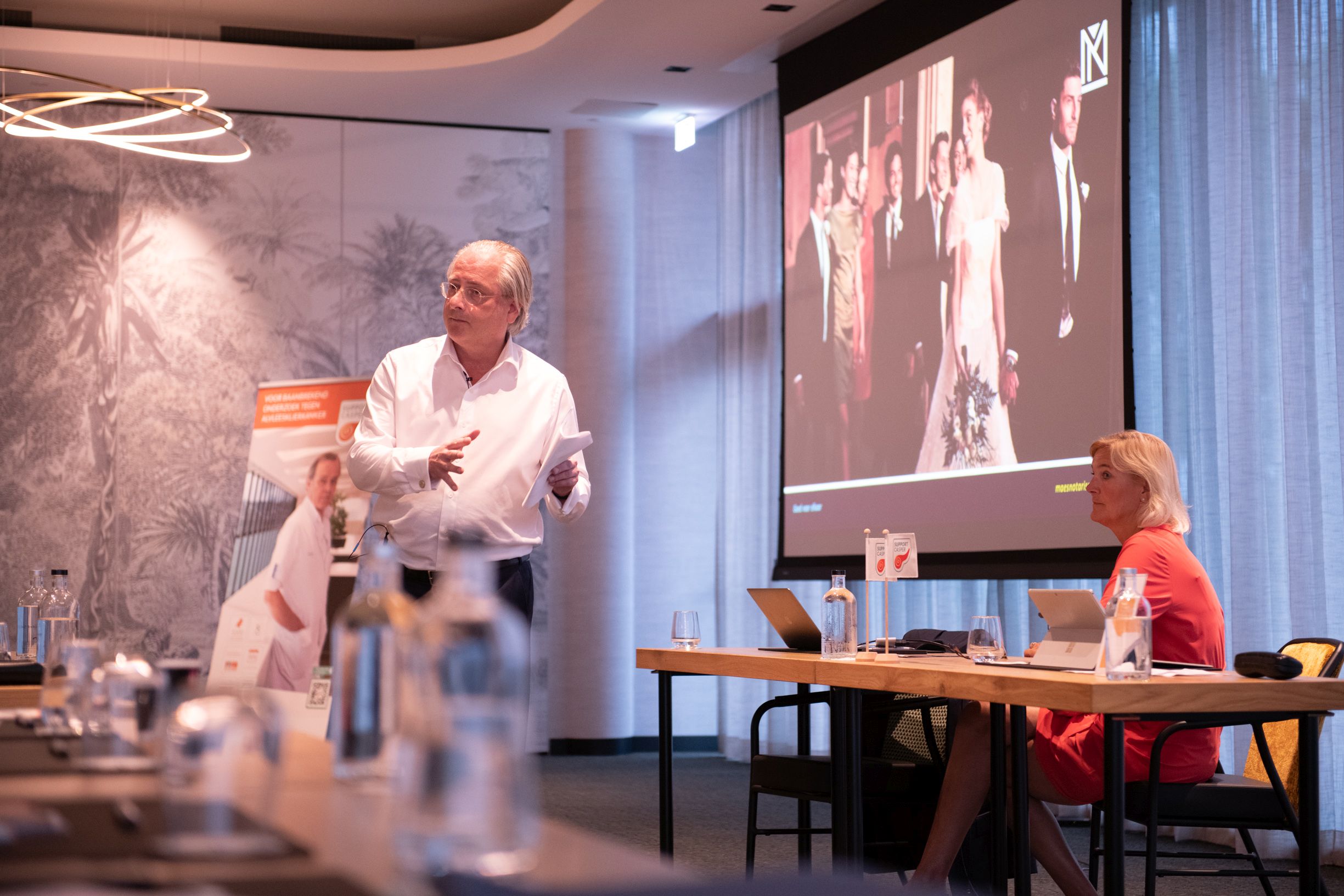
Free inheritance law information meeting on January 20, 2026
Come to the inheritance law information meeting hosted by MAES civil-law notaries on Tuesday, January 20, 2026. You'll receive free tips & tricks to help keep your assets (such as home equity) within the family and prevent them from disappearing unnecessarily into the national treasury.
Register now! Participation is on a first-come, first-served basis. It's full.
Beware. There are "fake notaries" operating in the region. They are commercially driven salespeople, like door-to-door salespeople, who cleverly try to foist useless wills and other products on often vulnerable consumers in rented rooms and at people's homes. Stay away from them. Such individuals, often not always honest, are unskilled, not subject to disciplinary law, and not subject to the strict professional and behavioral rules that apply to (real) notaries.

Notary Dispute Committee declares complaint unfounded
(Candidate) civil-law notaries are subject to disciplinary law. They must be able to justify their actions before the "Chamber for the Notary." This disciplinary court issues a ruling, in short, on whether a civil-law notary acted in accordance with the rules that apply to their profession ("as befits a civil-law notary"). In over 30 years, our civil-law notary has never had to answer to a disciplinary court. No disciplinary complaint has ever been filed against him.
We have a complaints procedure. Such a complaint can, for example, concern the amount of the invoice. If a complainant cannot reach an agreement with the civil-law notary, they can submit the (non-disciplinary) complaint to the Notary Disputes Committee. This has only happened four times in the past 33 years at our civil-law notary. In all four of those cases, the Disputes Committee deemed the complaint unfounded. In the fourth and final case, the Disputes Committee issued a decision on August 22, 2025, and the ruling was sent to the complainant and the civil-law notary on October 17, 2025.
Some complainants – unhindered by any knowledge – attach more value to their own judgment than to that of the Disputes Committee, the disciplinary judge or the civil court and often vent their anger, sometimes under a fake profile, by way of a review on Google.
Read below about the Disputes Committee's decision and how we handle such unfair reviews.

Without a doubt
Het team van MAES notarissen bezocht de voorstelling in de Stadsgehoorzaal in Vlaardingen. Fontijn vertelt open en energiek over haar veertien jaar topsport. Met humor en Rotterdamse nuchterheid geeft ze een kijkje achter de schermen van haar bokscarrière en de druk die hoort bij presteren op het hoogste niveau.

MAES Notarissen ends cooperation with the Nationale Notaris
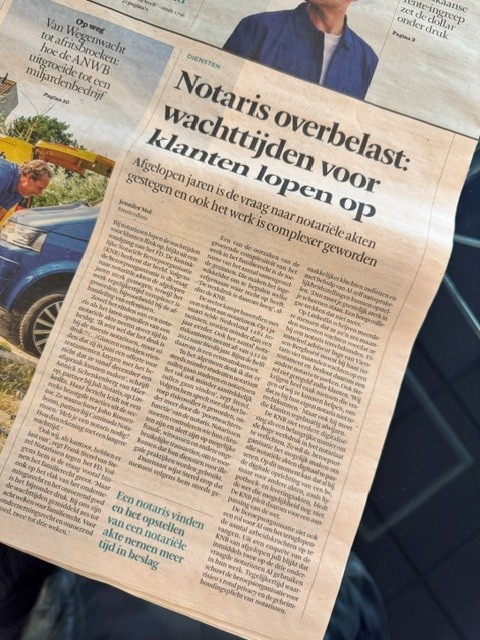
Notary, can't it be cheaper?
We're sometimes asked if it couldn't be cheaper... " because all you have to do is sign a standard deed that you can just pull out of the printer... "

Vicious little yapper or loyal top dog?
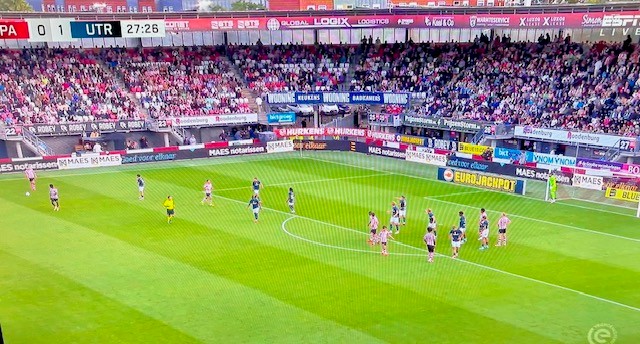
MAES notaries proud sponsor of Sparta
Starting this season, MAES Notaries will sponsor the oldest professional football club in the Netherlands by increasing MAES Notaries' visibility among the football-loving public on the more than 100-meter-long LED boarding displayed at Het Kasteel during Sparta's home games.
That was a success during today's Sparta - Ajax match, also seen in the summary from the 21st second and after 1.10 seconds.

Points to consider when borrowing from one's own BV as a director-major shareholder
accumulates money in their private limited company over a longer period.
Archive

Office outing
We have not scheduled any appointments for that day and are closed all day.
For questions that require an answer on Friday, we would like to refer you to frequently asked questions, along with the answers we have formulated for you. Please take a look at the FAQ .
On that day, we are available for urgent matters via the chat on our website or via WhatsApp at +31 (0)6 22 98 78 92. Online, our customers and those involved have uninterrupted 24/7 access to their files and can follow the progress of the case.
Starting Monday, we will be collectively ready for everyone again from 8:30 AM. That is, if we haven't melted.
Thank you for your understanding.

Join us. We're hiring!
We are happy to keep this seat free for someone hoping to find a good work-life balance with us. A new office colleague who was born for workplace happiness. Is performance-oriented. Sets realistic goals. A go-getter. Helps others and asks for support when needed. Takes initiative. Speaks up. And knows that change is progress. A jack of all trades. But one who doesn't always take themselves too seriously. Can laugh at themselves. Who manages to keep all those different balls in the air so skillfully and artfully, both at home and at our office. Just like us.
Project Development: The Challenges in 2026
The real estate investment market is recovering cautiously. Savills reported an investment volume of €3.3 billion in Q1 2026, led by residential and healthcare real estate. CBRE expects further growth in investment volume for 2026. Nevertheless, capital is more selective than before. Projects with uncertain permits, high energy dependency, or weak operational assumptions are facing greater difficulties. Three challenges are dominant: affordability, energy management, and housing densification. In addition, the Dutch government is expected to introduce the necessary policy adjustments.

PROVADA 2026
PROVADA is the largest real estate trade fair in the Netherlands. With more than 20,000 visitors, 100+ substantive knowledge sessions, and 270+ exhibitors.
This year, the real estate fair focuses on connection and collaboration to tackle the major challenges in the sector.

Box 3 in flux: points of attention for property owners
For real estate owners, Box 3 is a calculation model that directly impacts return, financing, rental strategy, and timing of sale. For years, the complaint was uniform: those who held real estate privately were taxed as if the assets generated a fixed return, even if the actual cash flow was lower. That system has shifted legally and politically. The major reform is now no longer scheduled for 2027, but for January 1, 2028, provided the legislative process is fully completed. Precisely for this reason, 2027 will be a preparatory year.
Mergers & divisions: are you on time?
Services
See also

Why MAES notaries